August 14, 2026
President of Haramain, Sheikh Abdul Rahman Al Sudais is applying Oud to the Black Stone and Kaaba.
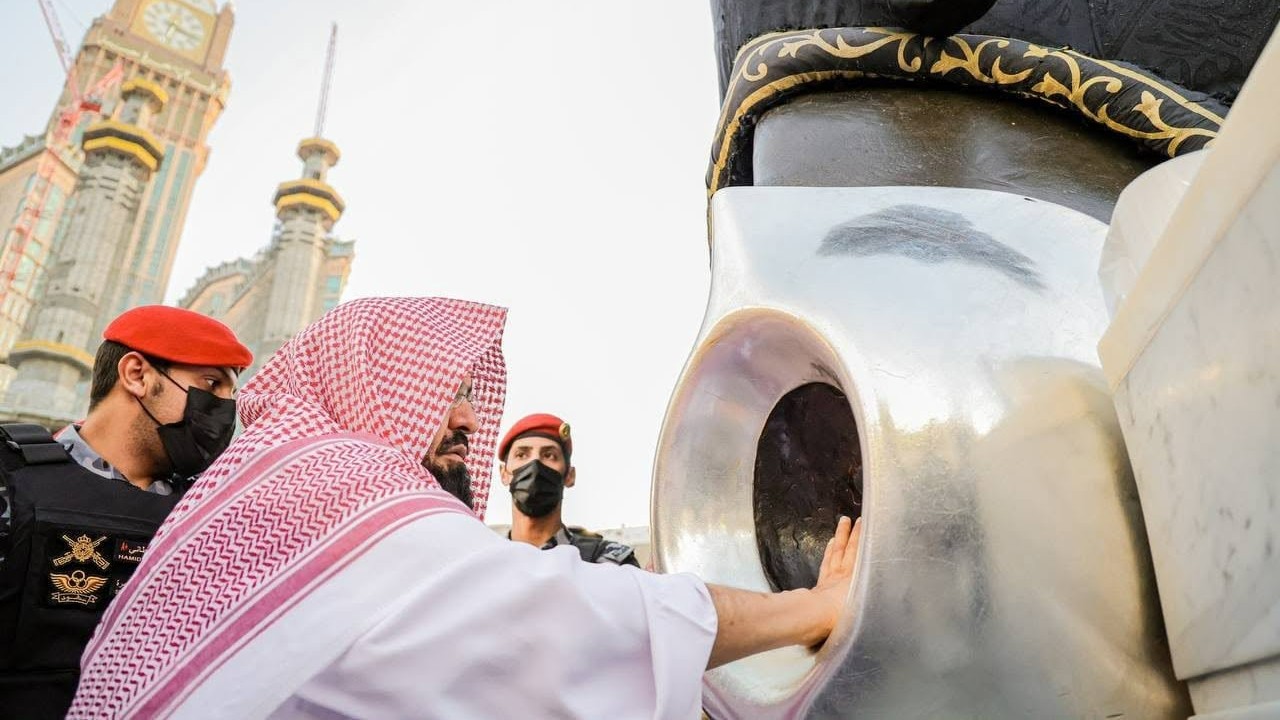
Dehn al Oud is a premium agarwood oil, and applying it to the Kaaba and the Hajar al-Aswad — the Black Stone — is a long-standing custodial practice at Masjid al-Haram in Mecca.
What’s happening in the video ? A caretaker pours dark, viscous oud oil into his palm and carefully rubs it onto the Black Stone’s silver casing. The same practice extends to the Multazam area between the Black Stone and the Kaaba’s door, and the Yemeni Corner. The goal is to honor the site and create a pleasant fragrance for pilgrims, not to change the stone itself.
The official ritual: The General Presidency for the Affairs of the Two Holy Mosques maintains a designated perfume section that applies the finest grade oud to the Kaaba daily. About 20 tolas (∼233 grams) of extracted oud are used each day, mainly on the Black Stone, Multazam, and the Yemeni Corner. They use top-tier agarwood varieties like Sioufi, Kalamantan, and Marouki. In recent years Dkhoni Company has been the exclusive supplier for premium bakhoor and oud at the Two Holy Mosques, replacing an earlier supplier.
Dehn al Oud specifically: “Dehn al Oud” means “oud oil” — it’s extracted directly from agarwood resin. In social media posts it’s often described as very expensive, with narrations claiming a small amount costs 28-30 lakh rupees. The practice is framed as part of the custodial care of the Kaaba, similar to the annual washing of the Kaaba with Zamzam water and rose water.
Religious context: Kissing or touching the Black Stone follows the Prophet Muhammad’s ﷺ example during Tawaf. The perfuming itself is a custodial act performed by authorized staff, not by individual pilgrims. You’ll also see the Kaaba’s kiswah — the black cloth — and the surrounding courtyard misted with oud and rose fragrances to maintain a heavenly scent for worshippers.
It’s a devotional tradition tied to the sanctity of the site, and it’s one of the few times fragrance is applied directly to the Black Stone as part of the mosque’s maintenance.